
What to Say in the First Therapy Session: Scripts and Structure
By Kristen McClure, MSW, LCSW | TherapistWorksheet.com
A new client is sitting across from you. They’re nervous. You might be too — even with years of experience, the first session carries a weight that routine sessions don’t.
Because the first session isn’t really about gathering history or completing an intake form. It’s about one question the client is asking, mostly unconsciously: Is this a person I can trust?
They’re watching everything. Your tone, your face, whether you seem comfortable or performing, whether the questions feel like a conversation or a bureaucratic exercise. And the answer they arrive at — often within the first ten minutes — will determine whether they come back.
What Matters Most
The most important thing about the first session isn’t what you cover. It’s how the client feels when they leave.
If they feel seen, heard, and safe enough to return — the session was a success. You can gather the rest of the history over time. But if the client leaves feeling like a diagnosis that walked through the door, no amount of thorough intake documentation will bring them back.
Opening the Session
The first words matter more than you think. Here are two options that set a warm, collaborative tone:
“Welcome. I’m glad you’re here. Before we dive in, I want to let you know what today will look like. I’d love to hear about what’s bringing you to therapy, and I’ll share a little about how I work. There’s no pressure to cover everything today. This is just a beginning.”
This immediately reduces pressure. The client doesn’t have to perform or show up with their whole story ready.
For telehealth:
For telehealth, keep the opening simple: confirm the connection, orient the client to what the first session will look like, and reduce pressure to tell their whole story immediately.
Helping the Client Begin
You do not need a perfect opening question. Give the client a clear place to begin and enough room to tell the story in their own order. If they seem unsure where to start, one useful prompt is: “What would you most want me to understand about what you’re going through?”
The paid toolkit includes additional opening language and options for clients who are anxious, reluctant, overwhelmed, or highly prepared.
Common First-Session Challenges
When They’re Barely Talking
When a client is barely talking, reduce pressure. Normalize that first sessions can feel awkward, slow the pace, and give them permission not to have a polished story ready.
When They Dump Everything at Once
“I can hear how much you’ve been carrying. Thank you for trusting me with all of that. I want to make sure we don’t rush past any of it. Can we slow down and focus on the piece that feels most important right now?”
When They Ask “Can You Help Me?”
“I believe I can. Based on what you’ve shared, what you’re dealing with is something I’ve worked with before, and I think there’s a path forward. Therapy isn’t a quick fix, and I can’t promise a specific outcome. But I can promise I’ll show up fully for this work with you.”
The One Question That Tells You Everything
Ask this in every first session:
“Have you been in therapy before? And if so, what worked — or didn’t work — about that experience?”
This single question reveals more about what the client needs from you than anything else you can ask. It tells you their expectations, their fears, their relational patterns, and what the last therapist got wrong.
The Complete Toolkit
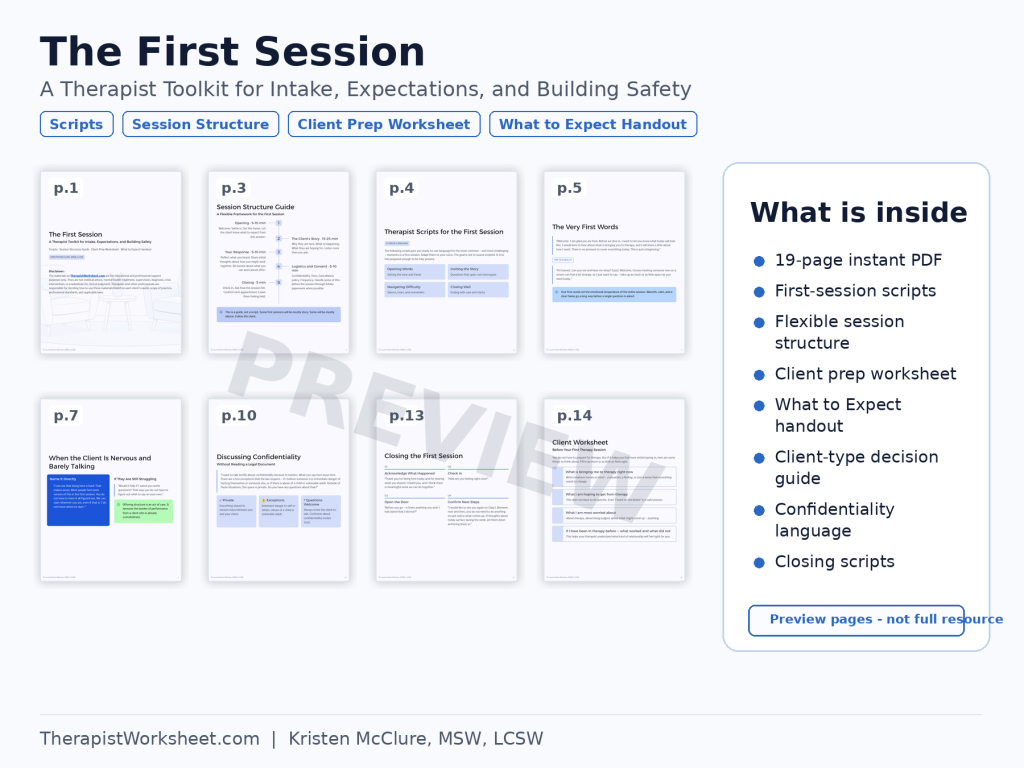
The full First Session Toolkit includes:
- 12 therapist scripts — opening words, alternatives to “what brings you here,” when the client cries, when they can barely talk, when they dump everything, explaining your approach, discussing confidentiality, closing the session, and more
- A client prep worksheet (“Before Your First Session”)
- A decision guide for adapting your approach by client type — anxious, mandated, previous bad therapy experience, crisis
- A “What to Expect in Therapy” handout for new clients
See the First Therapy Session Toolkit →
Frequently Asked Questions
How much history should I gather in the first session?
As much as flows naturally. Don’t turn the first session into a form-filling exercise. If your intake paperwork is thorough, you already have the basics — use the session for the story behind the story.
Should I share my theoretical orientation?
In plain language, briefly. Nobody needs to hear “integrative psychodynamic” on their first visit. They need to know what it will feel like to work with you.
What if the client cries in the first session?
Let them. Say: “You’re safe here. Take whatever time you need.” Tears in a first session usually mean the client has been holding something for a long time. Your calm presence is the intervention.
How do I close a first session?
“Thank you for being here today. I heard you, and I think there’s meaningful work we can do together. How are you feeling about coming back?”
Kristen McClure, MSW, LCSW is a licensed therapist who creates practical clinical tools to help therapists navigate the hardest moments in their work.
[Browse the full library at TherapistWorksheet.com →]