
First Therapy Session Script for Therapists: What to Say and How to Structure It
First sessions can feel like a lot to hold at once. You are listening to the client’s story, assessing fit and safety, explaining confidentiality and how therapy works, watching the time, and trying to make the whole thing feel like a conversation rather than an intake form.
Sometimes you know what you need to cover. You just need words that sound natural.
This 19-page toolkit gives you a clear first-session structure and practical language for the moments when you are not sure what to say next.
Use it when:
- you are not sure how to open or structure the first hour
- a client is quiet, nervous, overwhelmed, or sharing everything at once
- you need natural language for confidentiality, your approach, or difficult questions
- you want a clearer way to pace and close the session
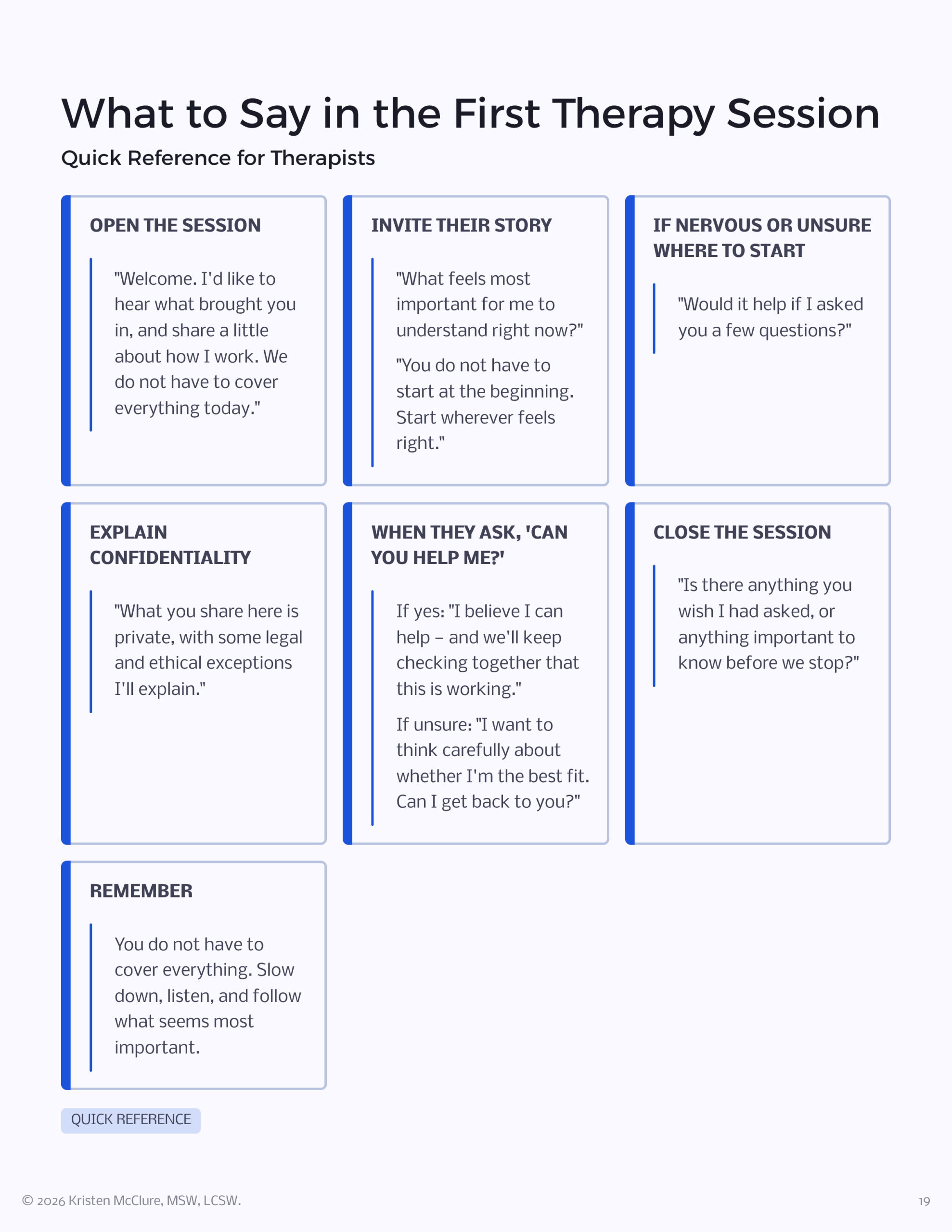
19-page PDF · Instant download · $1.99
What’s inside
- a quick first-session roadmap
- therapist scripts for common first-session moments
- guidance for different client presentations and pacing needs
- a decision guide for adapting the session
- client prep and What to Expect in Therapy handouts
Made to be used, not memorized
You do not need to follow the language word for word. Use it as a starting point when you need a little more structure so you can stay present with the person in front of you.
Created by Kristen McClure, MSW, LCSW, drawing on 31 years of clinical practice.
Format: Printable PDF
Length: 19 pages
Price: $1.99
Related therapist tools
If you want structure before the client ever arrives, see the 15-Minute Consultation Call Toolkit. If the harder part is ending on time when important material comes up late, see the Session Closing Scripts Toolkit. You can also browse therapy scripts for therapists for other difficult clinical conversations.