
What to Say and Do in a 15-Minute Therapy Consultation
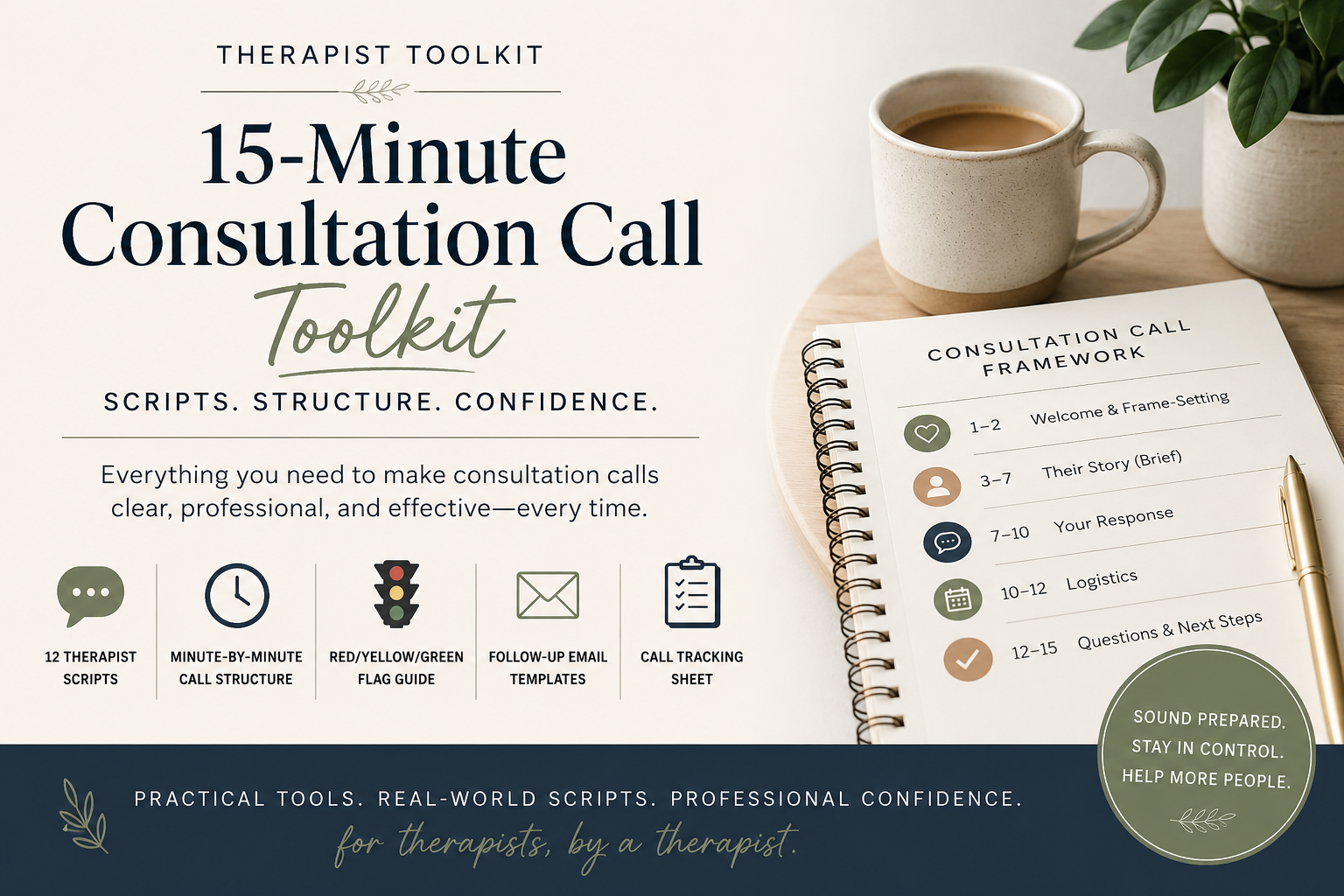
A practical guide for therapists who want to know what to say, what to ask, and how to decide what happens next.
During a consultation call, you’re meeting someone for the first time while trying to understand their needs, explain your approach, and determine whether working together makes sense. You also need to discuss fees, availability, and next steps—often in just 15 minutes.
A consultation call opening script
“We have about 15 minutes. I’d like to hear a little about what you’re looking for, answer your questions, and talk about whether my practice might be a good fit. We’ll also cover fees and availability. You don’t need to share your whole history today.”
What to cover in a 15-minute consultation
- Minutes 0–2: Set the scope. Introduce yourself, explain the purpose of the call, and check that the person can speak privately.
- Minutes 2–6: Ask what they need. “What are you hoping a therapist can help you with?” Ask enough to consider fit without inviting a detailed trauma account.
- Minutes 6–10: Explain your approach. Describe how you would begin and be honest about your experience and limits.
- Minutes 10–13: Discuss practical details. Cover fees, payment or insurance arrangements, availability, and session format.
- Minutes 13–15: Agree on next steps. Offer an appointment when appropriate, explain what else you need to know, or discuss referral options.
These times are a planning aid. If an urgent safety concern emerges, pause the routine consultation and follow appropriate assessment and crisis procedures.
Example: the caller is unsure about booking
“You don’t have to decide during this call. Is there anything else you’d like to know about how I work? If you’d like, I can explain the next step so you have that information.”
For a fuller free walkthrough, read how to run a therapy consultation call.
The printable consultation toolkit
What to Say and Do in a 15-Minute Therapy Consultation gives you flexible scripts, a five-stage call framework, and reference tools you can use before, during, and after a call.
Only $3.99 · Instant digital download · Includes standard and low-ink versions (11 pages each)
What you’ll be able to do
- Open the consultation naturally and explain what the call will cover.
- Ask about the prospective client’s concerns without turning the call into a full therapy session.
- Explain your therapeutic approach in everyday language.
- Respond to questions about experience, success rates, fees, and insurance.
- Consider clinical fit, identify when you need more information, and make appropriate referrals.
- Close with clear next steps and follow up when appropriate.
What’s inside the 11-page toolkit?
- Five-stage, 15-minute call map with flexible time frames.
- Ready-to-adapt scripts for opening, exploring concerns, redirecting, and describing your approach.
- Scripts for tricky moments, including questions about choosing a therapist and treatment outcomes.
- Fees, crisis, and closing guidance for situations that require additional care.
- Clinical fit traffic-light guide to help you decide when to schedule, gather information, or take action.
- Three follow-up email templates for booking, undecided callers, and referrals.
- Consultation call tracking sheet and one-page desk reference.
Two PDF editions included
You’ll receive the complete 11-page toolkit in two formats: a designed standard edition and a low-ink printing edition. The material is the same in both.
Made for practicing therapists
Designed for therapists, clinical social workers, counselors, and other mental health professionals who offer brief calls to prospective clients. Created by Kristen McClure, MSW, LCSW, with more than 30 years of clinical experience.
This is a professional educational resource, not a substitute for clinical judgment, crisis procedures, supervision, or applicable legal and ethical requirements.
Need help with the next appointment?
See the First Therapy Session Toolkit for scripts and guidance after a client schedules.