
When a Client Cries in Session
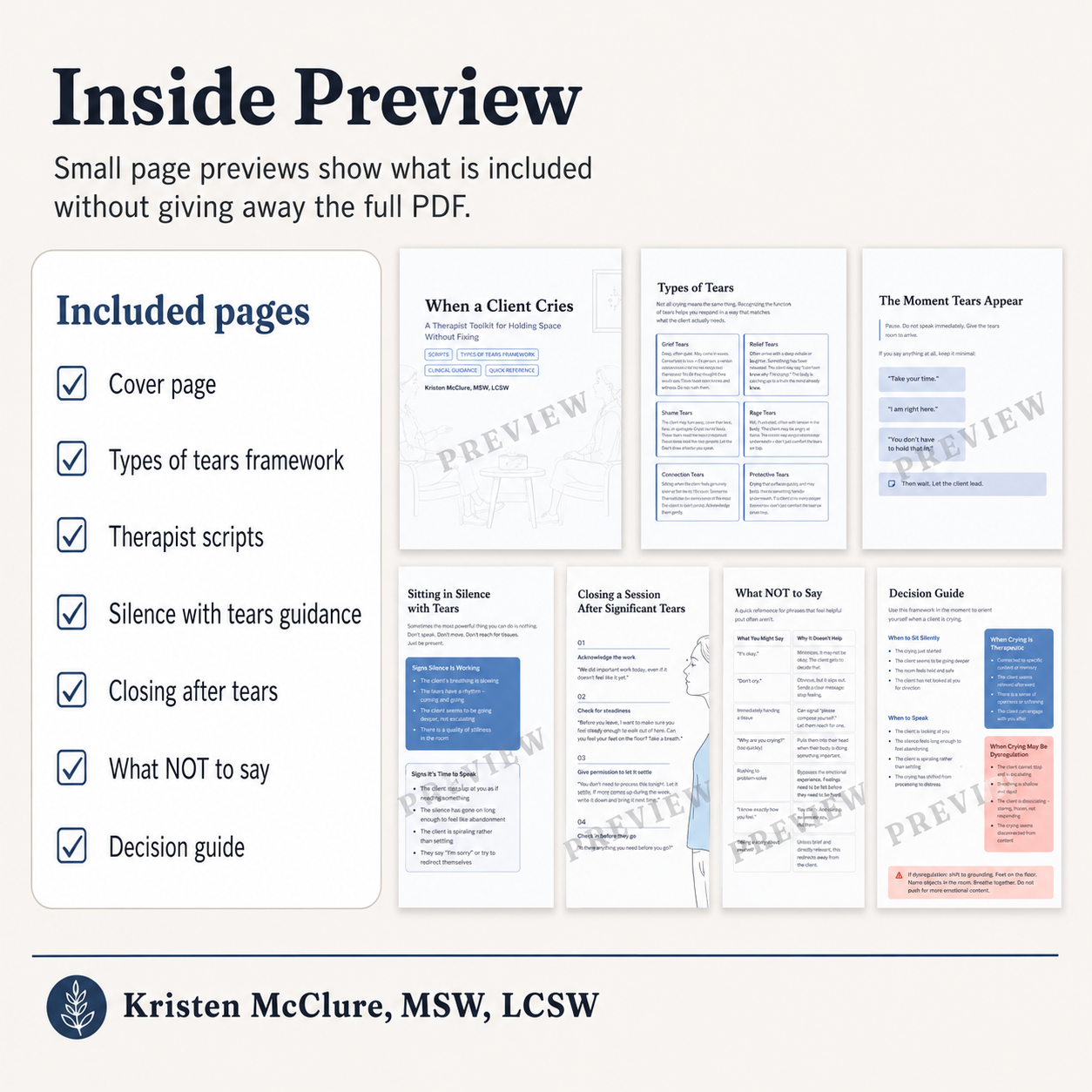
A therapist toolkit for the moment tears show up and you are deciding whether to speak, stay quiet, offer support, or simply wait.
Crying does not always mean the same thing. Grief, shame, relief, anger, overwhelm, and connection can all look like tears, but they do not always need the same response.
This toolkit gives you a framework for reading the moment more carefully, language you can adapt in session, and quick-reference guidance for staying present without rushing to fix what is happening.
20-page PDF · Instant download · $2.99
Use this when you are unsure what the tears need from you
- The client starts crying and you feel pressure to say something immediately.
- The client apologizes for crying or tries to stop themselves.
- You are not sure whether silence is helping or beginning to feel abandoning.
- The client shuts down after crying or becomes more overwhelmed.
- You need to close a session after significant emotional work.
- You are working by telehealth and want language that still feels human and steady.
What you get
- Types of Tears framework for distinguishing different possible functions of crying.
- Therapist scripts for the moments before, during, and after tears.
- When to speak / when to stay quiet decision support.
- What Not to Say quick reference.
- Closing-session guidance after intense emotional work.
- Telehealth and therapist-reaction guidance for situations that are harder to improvise.
Made to use, not just read
Created by Kristen McClure, MSW, LCSW, drawing on 31 years of clinical practice. The resource is organized so you can scan it before a session, bring it to supervision, or keep the quick-reference sections nearby during clinical work.
$2.99 · Instant PDF download
For educational and professional reference only. This resource does not replace clinical judgment, supervision, crisis intervention, or applicable legal and ethical requirements.
Related therapist tools
If the difficult part is deciding whether to wait or speak, see Navigating Silence in Therapy. If the emotional moment follows something that happened between you and the client, see When Something Goes Wrong in Therapy.