
ADHD Mini Manual for Therapists
A 50-page clinician’s guide for therapists who want a clearer, neurodivergent-affirming way to understand ADHD and know what to do in the room.
You have a client with ADHD on your schedule. You understand the diagnosis. But you still need to sort out what is ADHD, what may be something else, how to adapt therapy, what to ask, and what might actually help.
ADHD: A Clinician’s Mini Manual was written for that gap between knowing the textbook material and sitting across from a real client.
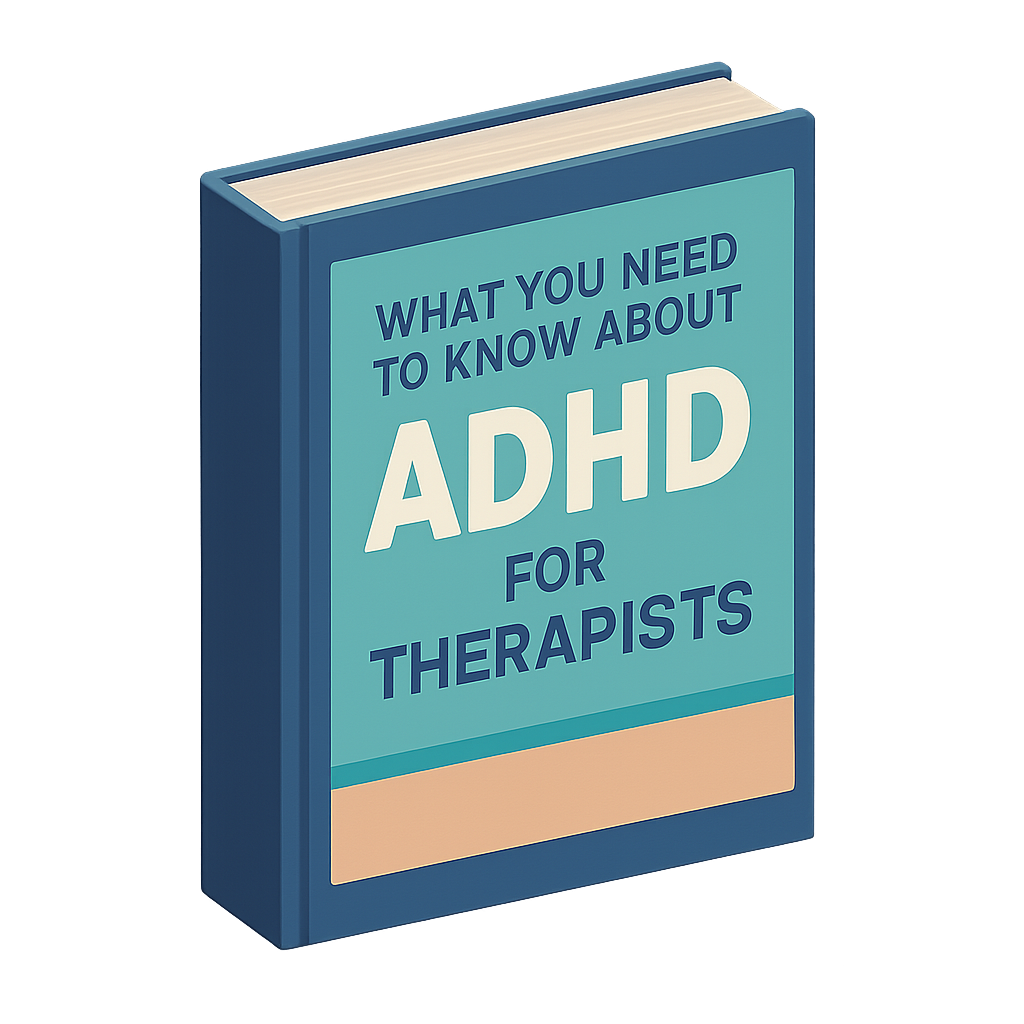
50-page PDF · Instant download · $2.99
Use this when you want more than a list of ADHD symptoms
- You are working with an adult who was diagnosed late and is rethinking years of self-blame.
- You are trying to separate ADHD from anxiety, depression, bipolar disorder, trauma, autism, or personality-related concerns.
- You want to adapt therapy so the client is not repeatedly failing at strategies that depend on the same executive functions they struggle to use.
- You are working with girls or women and want a better understanding of late diagnosis, masking, and hormonal transitions.
- You need a practical refresher on medication, co-occurring conditions, and when to refer or consult.
- You work with children or teens and need a quick overview of parent training, school supports, 504 Plans, and IEPs.
- You want scripts, cases, and a session roadmap you can return to before or after an appointment.
What is inside the 50-page manual
- ADHD across the lifespan — what ADHD is, where it comes from, and what does not cause it.
- A short history of ADHD — how the diagnosis has changed and why many adults still use the term “ADD.”
- The neurodiversity paradigm — affirming language, disability and support needs, and a balanced clinical frame.
- Emotional regulation — why emotional intensity can matter in ADHD and how to work with it without treating every reaction as pathology.
- Girls and women — missed diagnosis, late diagnosis, misdiagnosis, and hormonal transitions from puberty through perimenopause.
- Teen girls — common ways ADHD can be missed and what therapists should pay attention to.
- Assessment and differential diagnosis — ADHD alongside anxiety, depression, bipolar disorder, borderline personality disorder, and other conditions that can overlap.
- Co-occurring conditions — what else may need assessment and how to think about treatment priorities.
- Medication basics for therapists — what is useful to understand while staying within the therapist’s role and coordinating with prescribers.
- Child and teen therapy — parent support, school accommodations, 504 Plans, IEPs, and affirming approaches to difference.
- Adult ADHD therapy — a step-by-step approach, session roadmap, and ways to adapt therapy for executive-function and attention differences.
- Scripts for real conversations — plain-language starting points you can adapt to your own style.
- Common novice mistakes — places where therapists may accidentally moralize, overinterpret, or ask the client to rely on unsupported executive functioning.
- Safety and consultation guidance — reminders about when the clinical picture needs more assessment or another level of expertise.
- Two case vignettes, glossary, and full references — so the manual works as both a quick guide and a teaching resource.
Built for new therapists — useful beyond the beginning
This manual is especially useful for graduate clinicians, associates, therapists in supervision, and clinicians who do not specialize in ADHD but regularly work with clients who have it.
The language is intentionally plain. Sections are designed to answer the question a therapist is actually asking: What am I looking at, what should I consider, and what do I do next?
A neurodivergent-affirming clinical frame
The manual does not treat ADHD traits as character flaws or assume every difficulty should be normalized away. It looks at the interaction between the person, the environment, support needs, executive load, expectations, and actual impairment.
That means therapy may involve skills and behavior change, but it may also involve accommodations, external supports, changes in expectations, clearer communication, environmental changes, and reducing unnecessary shame.
Created by Kristen McClure, MSW, LCSW
Kristen McClure is a licensed clinical social worker with more than 30 years of clinical experience and longstanding specialization in ADHD, particularly ADHD in women. The manual is evidence-informed, written in plain language, and designed for practical use between sessions and in supervision.
50 pages · PDF download · $2.99
Want the free adult ADHD therapy guide first?
Read ADHD Therapy for Adults: A Practical Guide for Therapists for an overview of how ADHD may show up in adult therapy, what to assess, and how to adapt treatment. The mini manual is the fuller paid companion resource.
Frequently asked questions
Is this only about adult ADHD?
No. The manual covers ADHD across the lifespan and includes sections on children, teens, adults, girls and women, school supports, and adult therapy.
Is this a diagnosis manual?
No. It includes assessment and differential-diagnosis guidance for therapists, but it does not replace formal diagnostic training, supervision, or evaluation within your scope of practice.
Does it include treatment ideas?
Yes. It includes a step-by-step adult therapy approach, a session roadmap, practical adaptations, scripts, and guidance for common clinical situations.
Does it discuss ADHD in women?
Yes. The manual includes girls and women, late diagnosis, misdiagnosis, and hormonal transitions from puberty through perimenopause.
Is this neurodivergent-affirming?
Yes. The manual uses a neurodivergent-affirming frame while still addressing genuine impairment, distress, safety, co-occurring conditions, and support needs.
Educational resource only. It does not replace clinical training, supervision, diagnosis, prescribing guidance, or professional judgment.